Interior Design
How to Decorate a Living Room: A Designer's Step-by-Step Guide
By Greylyn Wayne · April 28, 2026 · 8 min read
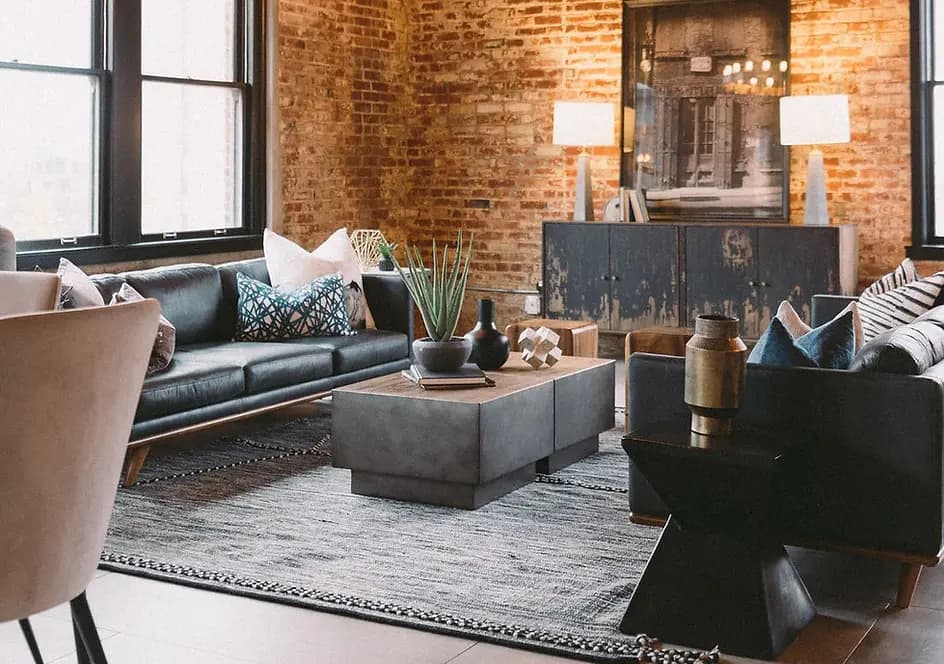
A designer's step-by-step approach to decorating a living room — from finding the focal point to sizing the rug, layering lighting, and editing it all down.
If you want to know how to decorate a living room without the second-guessing, the secret is sequence. Designers do not start with a throw pillow and work outward; they start with the bones of the room — the focal point, the traffic paths, the seating geometry — and let the pretty parts fall into place once that structure is sound. Do it in the right order and a room that felt random suddenly reads intentional; do it backward and you end up shopping for things to fix problems you created. This guide walks the same order of operations we use on Portland projects every week, from tall-windowed Pearl District lofts to cozy Craftsmans with a fireplace and not quite enough wall.
Portland living rooms have a personality of their own: older homes with small, awkward footprints, condos with one good wall of glass, and famously soft gray light. All of that shapes the choices below.
The 8 steps to decorating a living room
Here is the full sequence at a glance. We unpack each one below — follow them in order and the room will tell you what it needs next.
- Find the focal point and orient the room to it.
- Plan the layout and define a conversation zone.
- Choose the sofa and supporting seating.
- Anchor the room with a correctly sized rug.
- Layer lighting in three levels.
- Set coffee-table and art height right.
- Add texture, contrast, and greenery.
- Edit ruthlessly until it breathes.
1. Find the focal point
Every room has a natural center of gravity. In a lot of Portland homes it is the original fireplace; in a condo it is usually the window wall with the view; sometimes it is the television, and that is fine — just be honest about it. Identify the one thing the eye should land on when you walk in, and commit. When you try to make a room serve two competing focal points, the seating ends up hedging between them and nothing feels resolved. Pick one, and let the layout in the next step bow to it.
2. Plan the layout and the conversation zone
Now arrange the seating into a conversation zone — a grouping where people can talk without raising their voices or craning their necks. The rule of thumb: keep the gap between facing seats roughly 7 to 10 feet, and leave about 14 to 18 inches between the sofa and the coffee table. Float the furniture off the walls when the space allows; pushing every piece to the perimeter is the most common mistake we undo, and it makes even a large room feel like a waiting area.
Protect the traffic paths, too — keep a clear 30-to-36-inch lane through the room. In tight older Portland living rooms, an armless chair or a backless bench reads lighter than a second armchair and keeps the path open. If you are working with an especially small footprint, our small-space design ideas go deeper on furniture geometry that buys back square footage.
3. Choose the sofa and seating
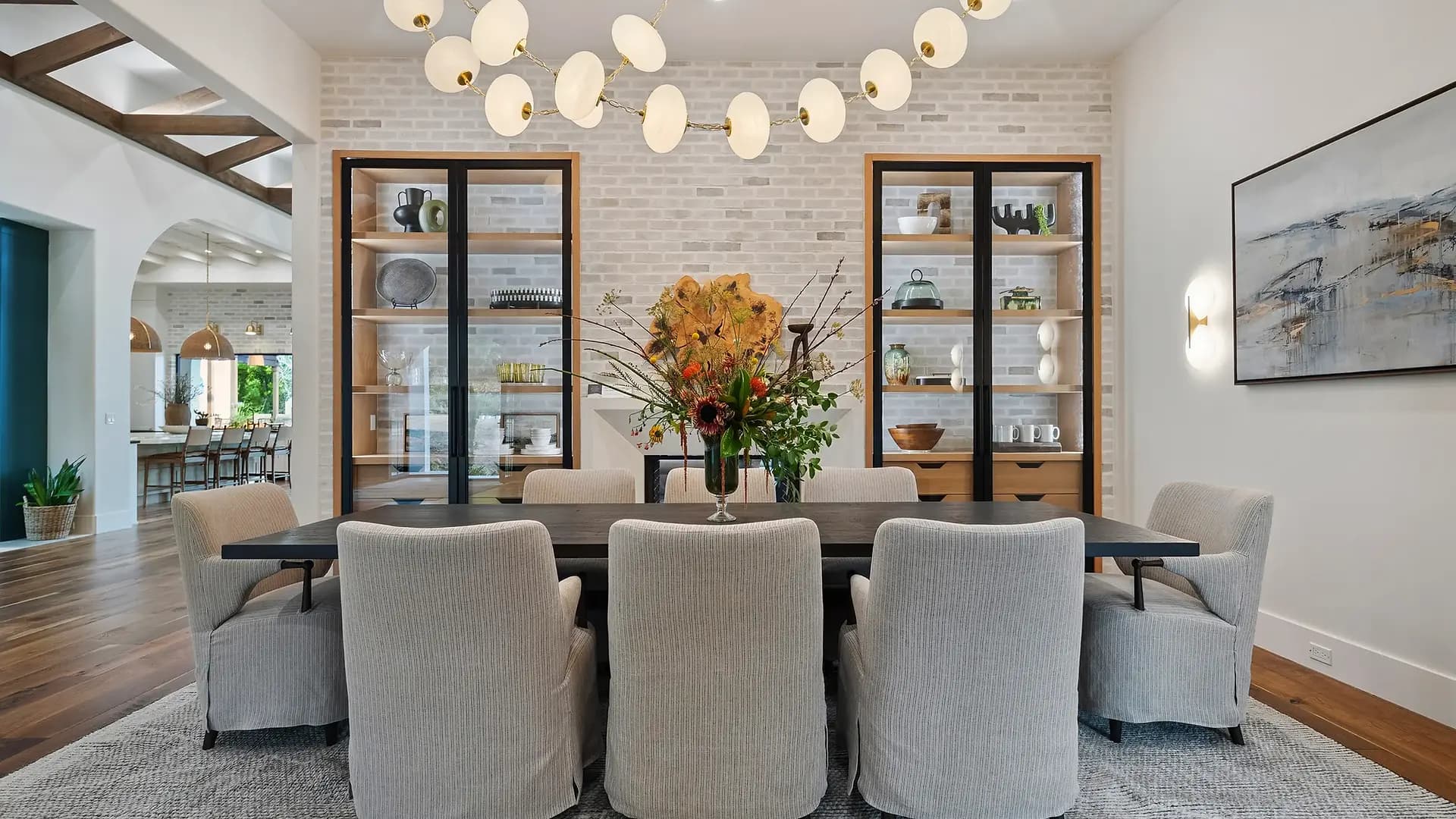
The sofa is the anchor purchase, so scale it to the room rather than to the showroom. Measure your wall and your doorways before you fall in love — a 96-inch sofa that looks modest in a cavernous store can swallow a 12-foot Portland living room. As a starting point, the sofa should occupy roughly two-thirds of its wall, leaving breathing room on either side. For deep, lounge-y comfort look for a 40-inch-plus depth; for an older home with tighter proportions, a tailored apartment sofa around 33 to 36 inches deep keeps the room from feeling crowded.
Then build out the seating with variety. A sofa plus two armchairs, or a sofa plus a loveseat and an accent chair, gives you flexible groupings and a little asymmetry that feels collected rather than matched-set. If you'd rather hand the sourcing to a pro, our interior design team specifies and orders these pieces to scale for you.
4. Anchor with the right-size rug
A too-small rug is the fastest way to make a finished room look unfinished — the dreaded postage-stamp floating in the middle of the floor. The fix is a simple rule of thumb.
- Minimum: the front legs of every seating piece sit on the rug. Nothing should be fully marooned on bare floor.
- Better: all four legs of the sofa and chairs land on the rug, which visually pulls the grouping together.
- Leave roughly 8 to 18 inches of bare floor between the rug's edge and the walls so the rug frames the room rather than wall-to-wall carpeting it.
- In practice that means a 5x8 is rarely enough for a real living room — most land on an 8x10 or 9x12.
5. Layer lighting in three levels
Overhead lighting alone flattens a room and casts hard shadows — and in Portland, where the daylight runs gray and low for months, lighting is not a finishing touch, it is half the mood. Build it in three layers so you can dial the room up or down.
Ambient, task, and accent
- Ambient: the general wash — a ceiling fixture or recessed cans, ideally on a dimmer so the room can soften at night.
- Task: light for doing things — a floor lamp beside the reading chair, a table lamp on the console for working or playing games.
- Accent: light that adds depth and warmth — a picture light, a small lamp on a shelf, or a sconce that grazes a textured wall.
Aim for at least three separate light sources at different heights, and keep bulbs in the warm 2700K range. Swapping a cool, bluish overhead bulb for a warm one makes the whole space feel more inviting on a dark January afternoon.
6. Get coffee-table and art height right
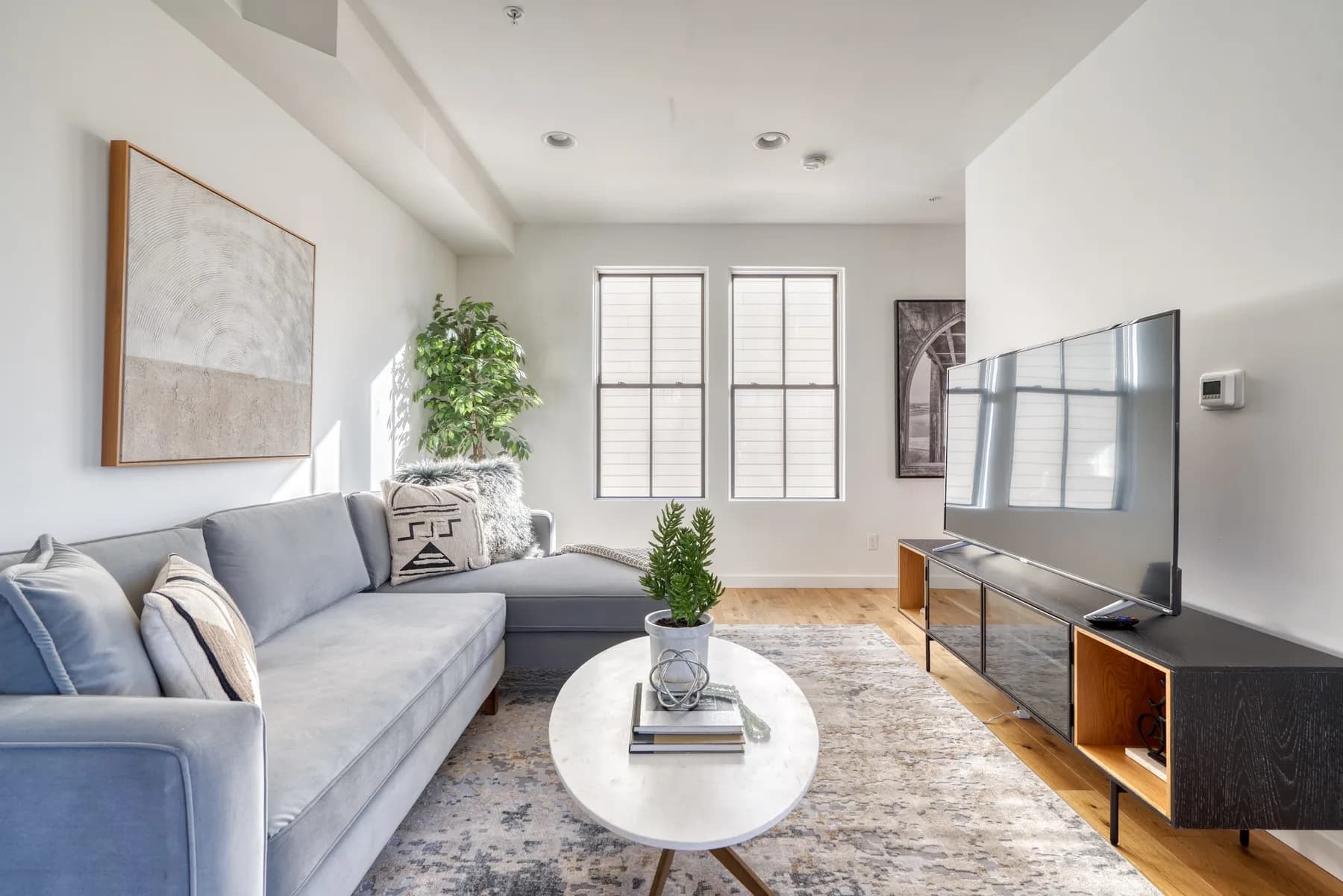
Two measurements separate a styled room from an almost-there one. The coffee table should sit close to the seat height of your sofa — within about an inch or two — and be roughly two-thirds the length of the sofa, placed 14 to 18 inches away. For the table itself, leave room to set down a drink; a tray corrals the styling and keeps it from looking cluttered.
For art, hang the center of the piece at eye level — about 57 to 60 inches from the floor. The most common error is hanging too high; art is in conversation with the people in the room, not floating near the ceiling. When you hang above a sofa, the artwork (or gallery grouping) should span roughly two-thirds of the sofa's width, with the bottom edge about 6 to 10 inches above the back cushions so the two read as one composition.
7. Add texture, contrast, and greenery
With the structure set, this is where the room comes alive. A neutral palette stays interesting when you vary the textures within it: a nubby boucle chair, a smooth leather ottoman, a chunky wool throw, linen drapery, a little aged brass or matte black for contrast. Layer two or three pillow fabrics rather than a matched pair, and let one pattern lead.
Then bring in something alive. A single large plant in a corner — a fiddle-leaf fig, an olive tree, a tall snake plant for low-light Portland rooms — does more than a dozen small tchotchkes, softening hard architectural lines. For palettes and materials worth leaning into, see our 2026 interior design trends.
“A living room should feel collected, not decorated. The goal isn't to fill every surface — it's to make the eye move comfortably from one well-chosen thing to the next.”
— Jody Wallace, Founder of Greylyn Wayne
8. Edit until it breathes
The final step is subtraction. Once everything is in, take a slow lap and remove anything that isn't earning its place. Surfaces want negative space; a coffee table with three intentional objects beats one buried under eight. Step back to the doorway and ask whether your eye lands somewhere restful or bounces around looking for a place to settle. That edit is the difference between a room that looks busy and one that looks designed — and it costs nothing.
Work the steps in order and almost any living room comes together. If you'd rather have a designer's eye on your specific space — your light, your awkward corner, your furniture — we'd love to help. Reach out for a free design consultation and we'll talk through your room.
Frequently Asked Questions
Where do I start when decorating a living room?
Start with the focal point — usually the fireplace, the window with the best view, or the television. Orient your seating toward it first, then plan the layout, choose the sofa, and add the rug, lighting, and styling in that order. Working from the bones outward keeps the room from feeling random.
What size rug should I use in a living room?
At minimum, the front legs of every seating piece should rest on the rug; ideally all four legs do. Leave about 8 to 18 inches of bare floor between the rug and the walls. For most living rooms that means an 8x10 or 9x12 — a 5x8 is usually too small and leaves the furniture looking marooned.
How high should I hang art in a living room?
Hang the center of the artwork at eye level — roughly 57 to 60 inches from the floor. Above a sofa, the piece should span about two-thirds of the sofa's width with the bottom edge 6 to 10 inches above the cushions, so the art and sofa read as one composition. Hanging too high is the most common mistake.
How do I make a small Portland living room feel bigger?
Float leggy furniture that shows floor beneath it, keep a clear 30-to-36-inch walking path, use a light palette with a few points of contrast, and add a large mirror to bounce the gray PNW daylight. Scaling furniture to the room rather than the showroom matters most in tight, older homes.
Thinking About Staging or a Redesign?
Greylyn Wayne has staged 2,500+ Portland-area homes and earned 4.9★ across 163 reviews. Tell us about your project — the consultation is free.