Interior Design
Small Space Design Ideas That Actually Work
By Greylyn Wayne · April 14, 2026 · 8 min read
Practical small space design ideas that make Portland condos, apartments, and older homes live larger — scale, vertical space, multi-function pieces, mirrors, and light.
The best small space design ideas aren't about cramming more in — they're about making the space you have feel taller, brighter, and more open. A small room is not a design problem; a small room decorated like a big room is. Portland is full of tight footprints worth getting right: Pearl District condos, Buckman fourplex apartments, century-old homes with bedrooms that were sized for a different era, and short-term rentals where every square foot has to photograph well and earn its keep. The tactics below come straight from how we approach those spaces — concrete, visual, and repeatable.
None of this requires knocking down walls. It is about scale, sightlines, light, and a few honest editing decisions. Here's what actually works.
Scale the furniture to the room
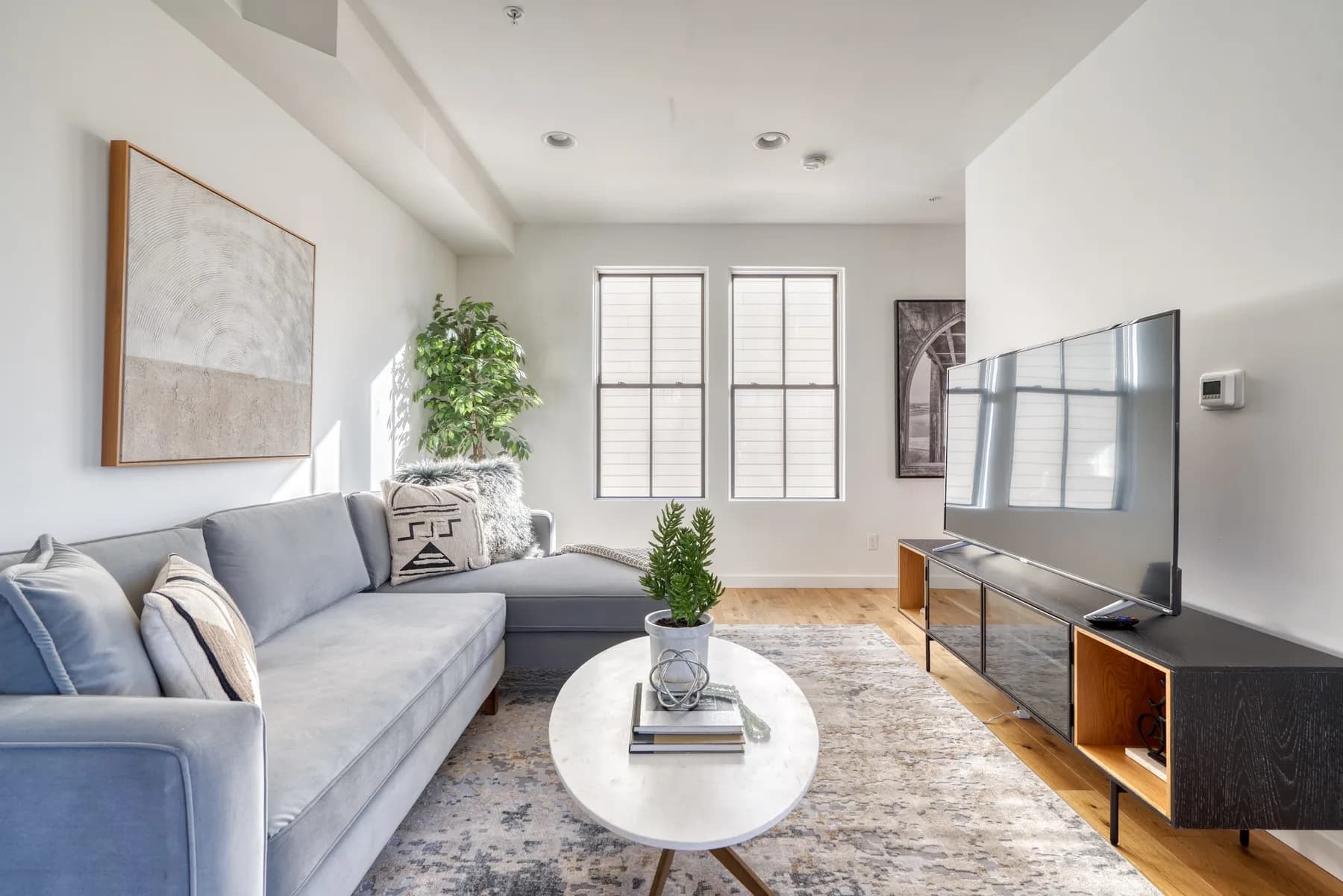
The single biggest mistake in small spaces is oversized furniture. A deep, overstuffed sectional that's gorgeous in a suburban great room will eat a 12-foot condo living room alive. Scale down: a tailored apartment sofa around 33 to 36 inches deep, a slim-profile dining table, an armless accent chair instead of a wingback. Measure your doorways and the actual wall length before you buy — and aim for the sofa to take up no more than about two-thirds of its wall so there's air on either side.
Counterintuitively, one larger well-scaled piece often beats several small ones. A clutter of tiny furniture chops a room into busy fragments; a single right-sized sofa and one generous chair reads calmer and, oddly, bigger. Restraint is the move.
Choose leggy furniture for visual flow
Furniture that sits on visible legs lets your eye travel underneath it, and that sliver of visible floor is what tricks the brain into reading more space. Pick a sofa and chairs raised on legs rather than skirted-to-the-floor styles, a console with open space beneath, a glass or acrylic coffee table that all but disappears. The same principle applies to a bed — a frame with legs and an open base feels lighter than a bulky storage platform pushed to the floor, even when the footprint is identical.
Make furniture work twice
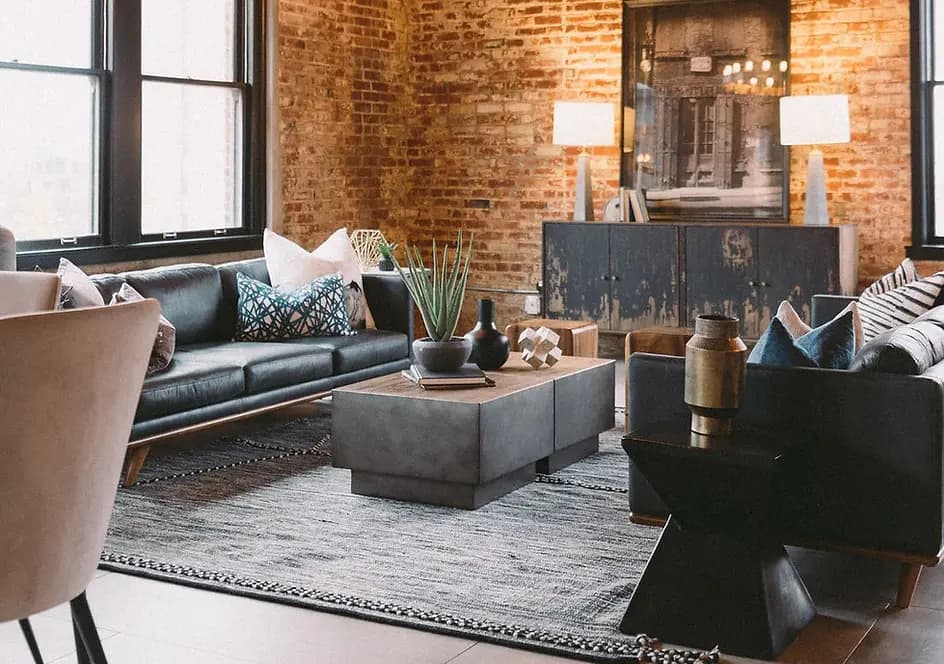
In a small home, every piece should ideally do more than one job. This is where multi-function and storage pieces earn their place — they let you live large without owning more furniture.
- A storage ottoman that's a coffee table, a footrest, extra seating, and a place to hide blankets.
- A nesting set of side tables you pull apart when guests come and tuck away when they leave.
- A bench with baskets underneath at the foot of the bed or by the door.
- A drop-leaf or extendable table that's a desk on weekdays and dinner for four on weekends.
- A bed with built-in drawers when closet space is tight — common in older Portland homes.
Use vertical space and draw the eye up
When floor space is limited, build upward. The fastest way to add the illusion of height is drapery: hang curtain rods close to the ceiling — not at the top of the window frame — and let the panels fall all the way to the floor. That single move can make an 8-foot ceiling read like 9. Floor-to-ceiling shelving, tall narrow bookcases, and art hung in a vertical column all reinforce the same upward pull.
Vertical storage also keeps the floor clear, and clear floor is the whole game in a small room. Wall-mounted shelves, hooks, and a tall slim dresser get belongings off the ground where they'd otherwise crowd the walkways. Keep at least a 30-inch path through any room so it never feels like an obstacle course.
Borrow light with mirrors and a smart palette
Light makes a room feel bigger, and Portland's gray skies mean you have to work for every bit of it. A large mirror is the highest-leverage small-space tool there is — position one opposite or perpendicular to a window and it bounces daylight deep into the room while visually doubling the space. Lean an oversized floor mirror in a corner, or hang one above a console.
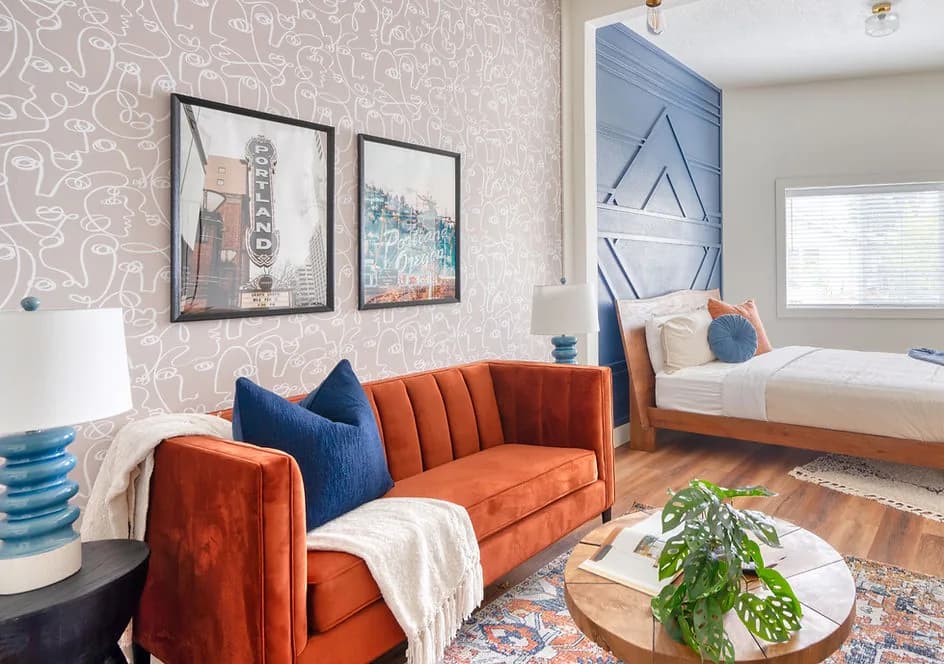
For the palette, go light overall — soft whites, warm greiges, pale sages — to keep the walls receding rather than closing in. But light does not mean flat: add contrast and depth with a darker accent piece, black window hardware, or a single moody wall so the room has a point of focus instead of dissolving into beige. Painting trim and walls the same light tone blurs the room's edges and makes it feel more expansive. To go deeper on furnishing a tight footprint room by room, see our step-by-step living room guide.
Zone an open studio
Studios and open one-bedrooms feel bigger when they read as a few defined zones rather than one undifferentiated room. You don't need walls — you need cues. Use a rug to draw the boundary of the living area, a low bookshelf or the back of the sofa to separate sleeping from lounging, and a slim console to mark the entry. A pair of open shelves or a folding screen can divide a sleeping nook without blocking light.
Keep the flooring and wall color continuous across the whole space so the zones feel intentional rather than chopped up, and let furniture do the dividing. The result is a studio that lives like a small apartment instead of one big multipurpose box.
Edit, then declutter
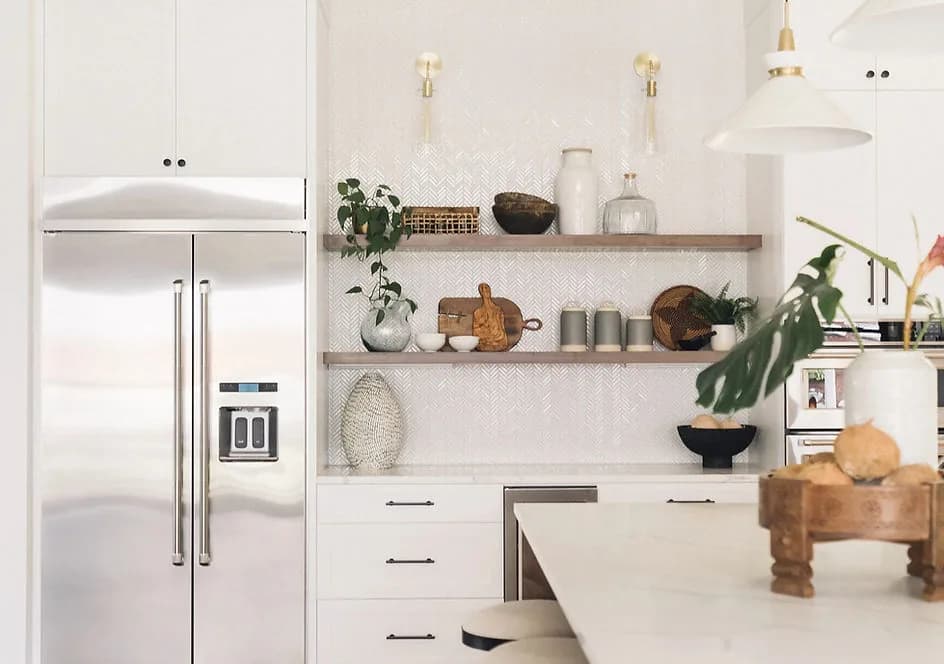
No design trick survives clutter. In a small space, every visible surface that's covered makes the room feel smaller and busier, so editing is not optional — it's the foundation everything else sits on. Clear the kitchen counters down to one or two intentional objects, keep coffee-table styling to a tray with two or three pieces, and give everything a home so it isn't left out by default. Negative space is a luxury that small rooms can absolutely afford, and it photographs as calm and expensive.
Why this matters for short-term rentals
Every one of these tactics is doubly important if you host. A small short-term rental that feels open, bright, and uncluttered photographs better, reviews better, and commands a higher nightly rate than an identical unit stuffed with mismatched furniture. Guests are reading your listing photos for a sense of space, so leggy furniture, mirrors, a light palette, and clear surfaces translate directly into bookings. Our short-term rental design work is built around exactly this — making compact Portland units live and shoot far larger than their square footage suggests.
Small spaces reward intention more than budget. Get the scale, light, and editing right and a tight Portland condo can feel genuinely gracious. If you'd like a designer's plan for your specific space, our Portland interior designers are here — reach out for a free consultation and we'll help your square footage punch above its weight.
Frequently Asked Questions
How do you make a small room look bigger?
Scale furniture down to the room, choose leggy pieces that show floor beneath them, hang drapery high and full-length to lift the ceiling, add a large mirror across from a window to bounce light, keep the palette light with one point of contrast, and edit surfaces down. Clear floor and clear sightlines do most of the work.
What furniture works best in small spaces?
Multi-function, leggy, right-scaled pieces: a storage ottoman, nesting tables, an apartment sofa around 33 to 36 inches deep, an extendable table, and beds or benches with hidden storage. Each piece should ideally do more than one job and leave visible floor underneath to keep the room feeling open.
How do you divide a studio apartment?
Use furniture and rugs instead of walls. A rug defines the living zone, the back of a sofa or a low bookshelf separates lounging from sleeping, and a slim console marks the entry. Keep flooring and wall color continuous across the whole space so the zones read as intentional rather than chopped up.
Do these ideas help small short-term rentals?
Yes — they're essential for hosts. A small rental that feels open, bright, and uncluttered photographs better, earns stronger reviews, and supports a higher nightly rate. Leggy furniture, mirrors, a light palette, and clear surfaces all translate directly into better listing photos and more bookings.
Thinking About Staging or a Redesign?
Greylyn Wayne has staged 2,500+ Portland-area homes and earned 4.9★ across 163 reviews. Tell us about your project — the consultation is free.